
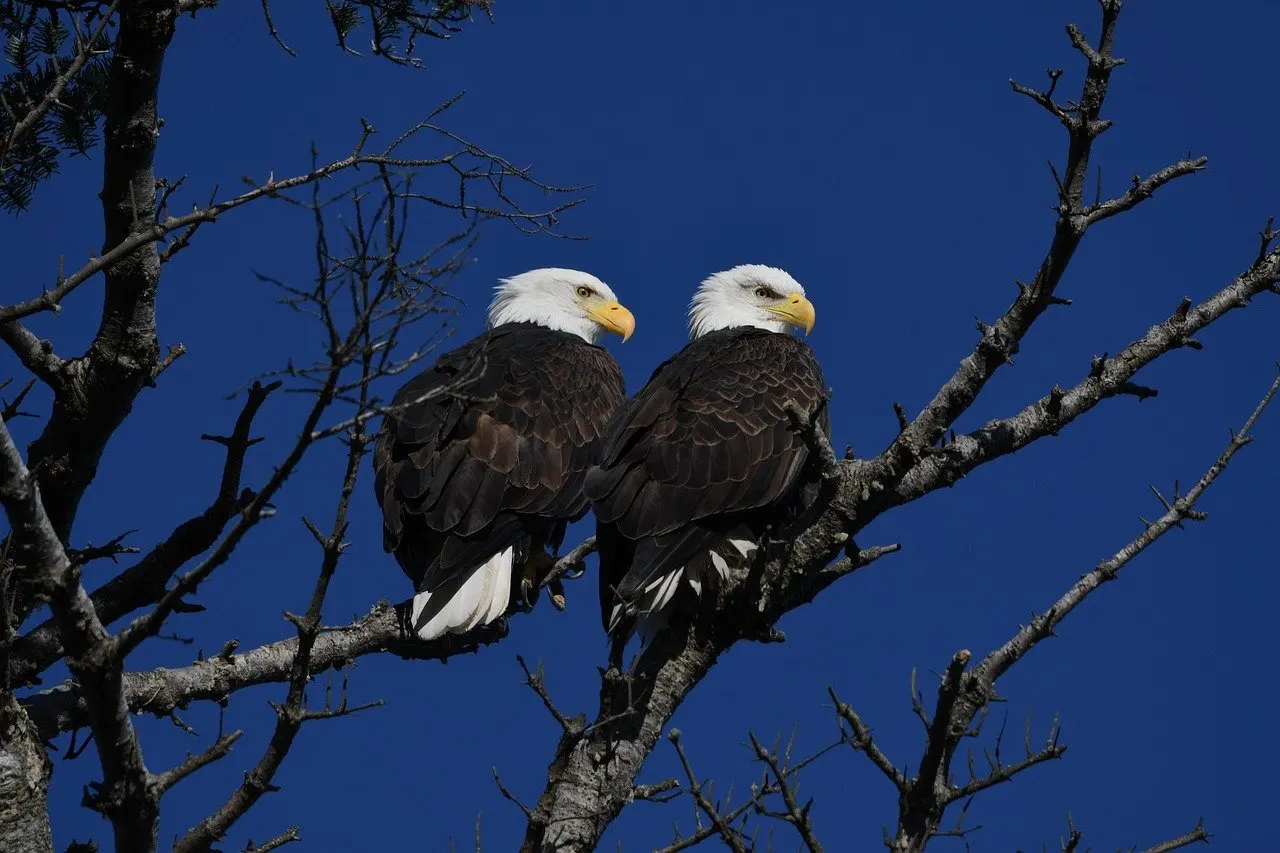
Seeing an eagle over a river or a gull over a bay raises the question of what feeds them. The Maine food web answer: energy moves from plankton, plants and fungi through prey to predators, and the links differ by habitat.
This guide follows feeding links rather than listing species, and it corrects the assumptions that most often blur the picture. It supports the wider overview of Maine ecosystems, which places each habitat in context.
How energy moves through a food web
A food web is a map of who eats what, and its arrows carry energy from producers to consumers. In the Gulf of Maine the base is plankton. In a Maine forest it is trees and other plants, supported by fungi in the soil. Every grazer, scavenger and top predator above that base is living on energy the producers captured.

The word “web” matters. Most animals eat several foods and are eaten by several predators, so a weakened link changes more than the pair of species involved. The practical way to read a food web is to pick one animal and ask what it eats, what eats it, and which habitat it needs at each stage of its life. The table below sets the most common assumptions against what the evidence supports.
| Common assumption | What the evidence supports | Planning use |
|---|---|---|
| The Gulf of Maine is open water with fish in it | It covers 36,000 square miles, and mixed currents, shelf upwelling and seasonal warm and cool layers shape its nutrients | Start with the water and plankton before naming predators |
| Ocean and freshwater food webs are separate | Alewives live in the ocean but return to fresh water to spawn, and they feed fish, birds and mammals | Treat migratory fish as connectors between habitats |
| Warming is the only marine pressure | The water is also becoming more acidic, which can erode calcium or chitinous shells, including those of copepods | Track chemistry as well as temperature |
| A forest food web is animals eating animals | Fungal mycelium can connect different tree species, and trees feed it carbohydrates and sugars | Include fungi as a link in the forest web |
These figures and findings come from a report on the warming Gulf of Maine and from the Maine Organic Farmers and Gardeners Association’s story on forest mycelium.
The Gulf of Maine: nutrients, layers and plankton
The Gulf of Maine extends 36,000 square miles along the eastern seaboard of North America, and its food web begins with how the water moves. The report on the warming Gulf describes a blend of currents that bring and mix nutrients, including upwelling from the continental shelf along with the Gulf Stream and Labrador currents. Nutrient-rich water is what lets plankton, the base of the marine web, support everything that feeds on it.
Seasonal stratification also separates the water into warmer and cooler layers. Plankton live inside that layered, nutrient-mixed setting. A change in warmth, mixing or chemistry therefore reaches the base of the web first, and then every animal that depends on it.
Acidification as a plankton problem
The same report notes that the water is becoming more acidic from carbon emissions. Anything with a calcium exoskeleton or chitinous shell, from coral reefs to copepods, can get eroded. Copepods are small plankton animals, so shell erosion is a pressure at the base of the web, not only a concern for shellfish. The report describes erosion as something that can happen. It does not put a number on how much plankton the Gulf of Maine would lose.
Forage fish: alewives as the link between ocean and river
Forage fish are small, abundant fish that larger animals depend on, and the alewife is the clearest example in the Gulf of Maine record. Alewives live in the ocean but return to fresh water to spawn. The report on the Gulf says they now feed a variety of other fish, birds and mammals.
That life cycle is why the ocean and freshwater webs are not separate. A predator that eats alewives depends on whatever alewives need at each stage, including access between salt water and the fresh water where they spawn. If you are judging the health of a coastal food web, ask whether the migratory links are intact before asking which predators are present.
American lobster: predator, prey and a shell to protect
The American lobster sits in the middle of the marine web, both finding food and avoiding predators, and the warming-Gulf report ties acidification to both jobs. Acidification may impair a lobster’s sense of smell. That could make it harder for lobsters to find food and detect predators.
This matters for the web because a link depends on detection. A predator that cannot locate prey, or prey that cannot sense a predator, changes who eats whom even when both species are still present. Lobsters are therefore a useful species to watch for early signs of chemical stress, not just a fishery to count.
Forest food webs: fungi, trees and herbivores
A Maine forest food web starts below ground as well as in the leaves. The Maine Organic Farmers and Gardeners Association’s account of forest mycelium reports that researcher Suzanne Simard found the mycelium layer can connect different species of trees. In that arrangement the trees supply the fungus with carbohydrates and sugars, and the connection carries carbon and nutrients between trees. The finding describes how mycelial networks can work. It is not a Maine-specific measurement.
The practical lesson is that a forest is not only a stack of animals eating animals. Fungi and trees trade resources, and that trade underlies everything that browses or hunts above them. For how stand changes ripple through the forest community, see Maine forest ecology. Which web you are looking at also depends on habitat, and types of habitats in Maine sorts the forest, wetland and coastal settings.
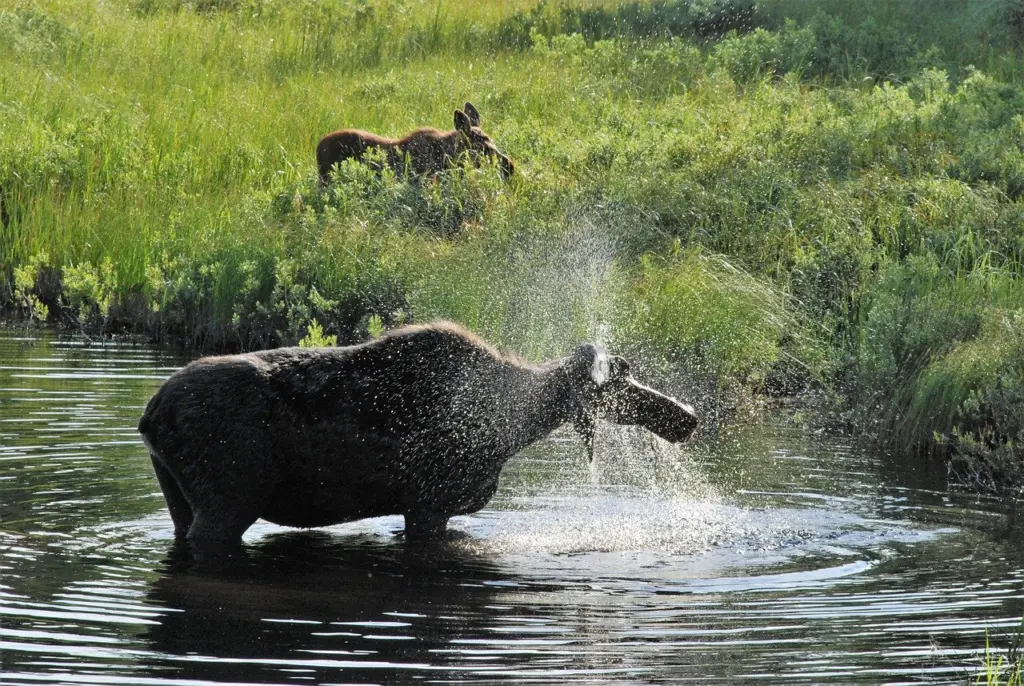
Herbivores such as moose are the hinge in a land web. They turn plant tissue into animal biomass, which is why the plants and wetland vegetation a herbivore relies on are part of any predator’s food supply.
Apex predators and keystone species: roles, not rankings
An apex predator is an animal with few or no natural predators of its own. A keystone species is one whose effect on its community is much larger than its numbers would suggest. The two labels describe different things. A top predator is defined by where it feeds, and a keystone species by what would change if it disappeared.
Raptors at the top
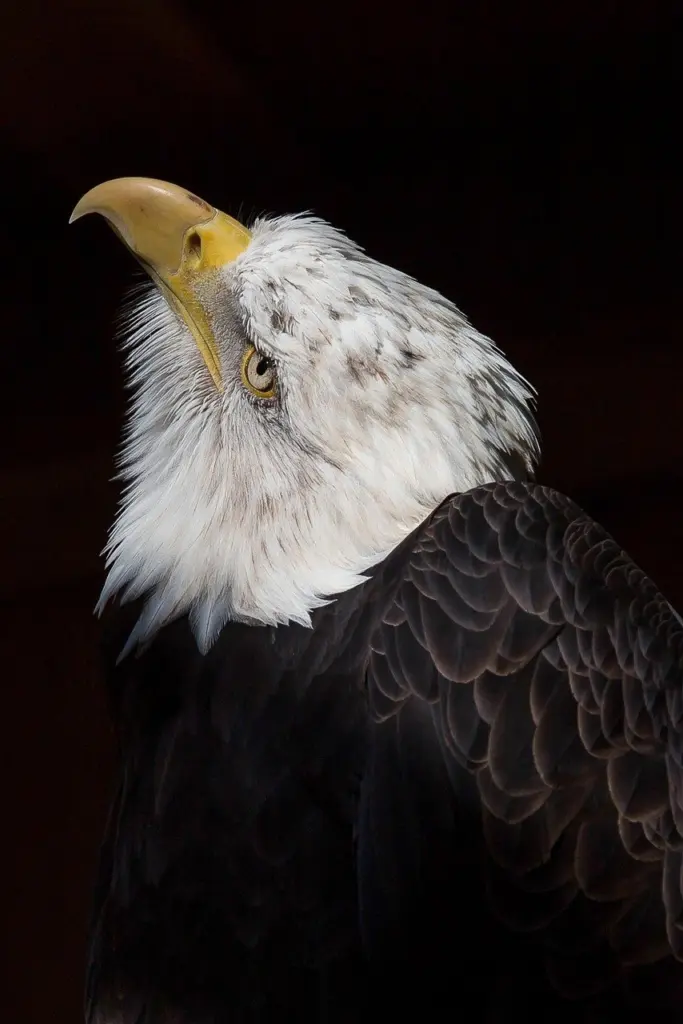
The bald eagle is a familiar top avian predator in Maine’s river and coastal habitats. Its diet depends on the prey beneath it, which makes it an indicator of how well the lower links are functioning.
Forest carnivores
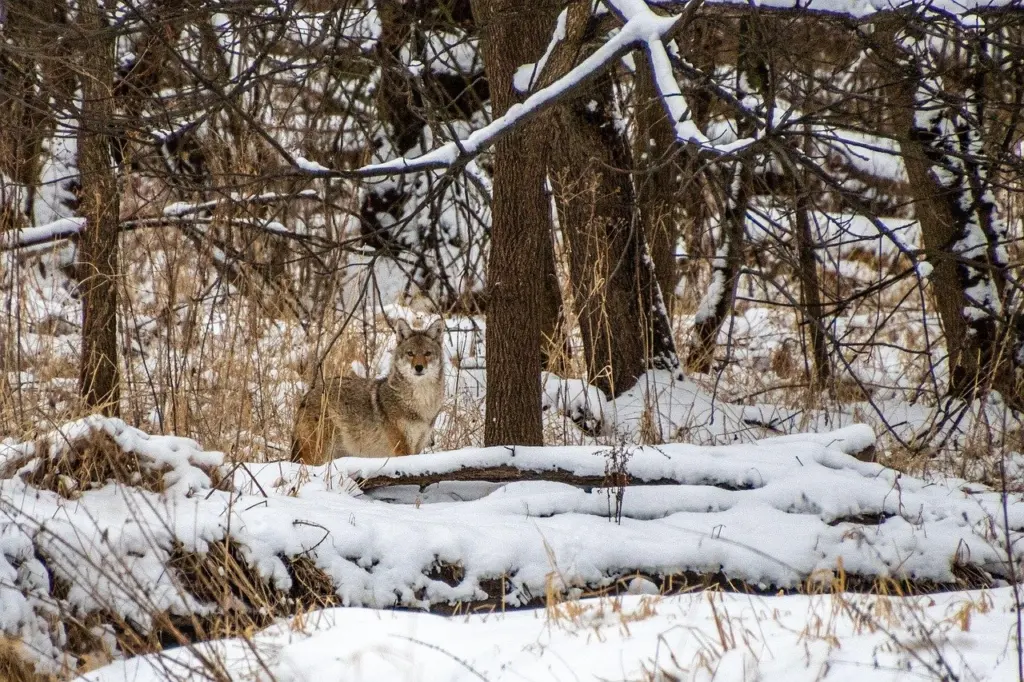
On land, carnivores sit above herbivores such as moose and the smaller plant-eaters. Their feeding links are the stretch of the web most visible to people, particularly in winter, when tracks on snow show who moved through a forest.
Be cautious with the word “keystone.” Size or fame does not make a species keystone. The claim needs evidence that removing the species would change the community more than its abundance suggests.
Reading change in a food web
When you read about a shift in Maine wildlife, a few checks keep the explanation grounded in feeding links.
- Start at the base. Ask whether the change begins with plankton, plants or fungi, because those are the producers every other link depends on.
- Follow the connectors. Species that move between habitats, such as alewives, carry energy across boundaries that look fixed on a map.
- Check life stages. A species can face different pressures as a young animal than as an adult, as with a fragile young lobster shell.
- Separate the pressures. Warming, acidification and habitat loss act through different links, so name which one a claim concerns.
Frequently asked questions
| Question | Answer |
|---|---|
| Could acidification threaten young lobsters? | The warming-Gulf report says it could potentially threaten a young lobster’s fragile exoskeleton in 10 or 20 years. That is a possibility, not a forecast. |
| Do male and female lobsters respond to warmth in the same way? | Not exactly. The same report says female lobsters prefer colder temperatures, while males are fine in warmer water. |
| Is mycelium the same as tree roots? | No. The forest mycelium account describes the mycelium layer as a structure that produces and feeds mushrooms, which are its fruiting bodies, not as roots. |