
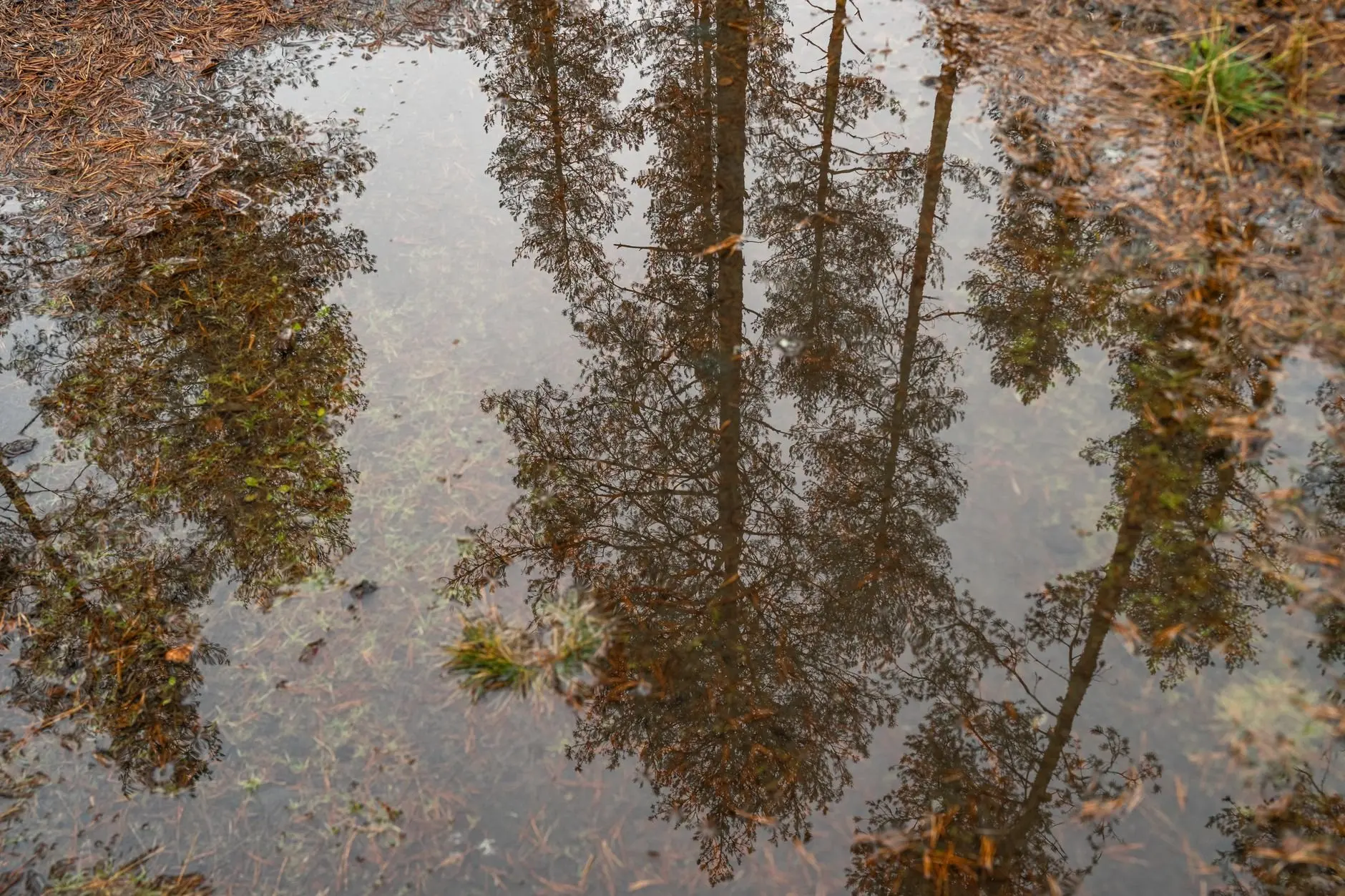
A mission vernal pool survey checks a seasonal forest pool for amphibian egg masses and fairy shrimp, timed just past peak breeding. In Maine, counts that meet species thresholds can make a pool significant under state law.
Pool surveys are one kind of volunteer fieldwork, and they sit alongside the wider habitat work described under invasive species monitoring. The sections below explain how a pool works, which animals signal one, what Maine counts as significant, and how to time and carry out the visit.
How a vernal pool works
Maine’s Department of Environmental Protection (DEP) describes vernal pools, or “spring pools,” as shallow depressions that usually contain water for only part of the year. Northeast Wildlife Team describes the typical Northeast cycle: the pool fills in late summer or fall and holds surface water until late spring or early summer, often drying for some period in the summer.

That drying is what makes the pool useful for breeding. Maine Audubon notes that vernal pools are relatively isolated from streams and subject to periodic drying, so they lack fish. Amphibian eggs and larvae can therefore develop in water without fish present.
The pool is only part of the animals’ range. Adults migrate down to the pools in spring, and after breeding, frogs and salamanders travel into the forest, where they spend most of their lives. Maine Audubon also reports that amphibians return to breed in the pool where they hatched, which is why it calls long-term protection of these pools critical. Its stewardship program treats critical terrestrial habitat as extending up to 750 feet from the pool, a useful reminder that the surrounding forest matters as much as the water.

Species that signal a vernal pool
Maine Audubon lists wood frogs, spotted and blue-spotted salamanders, four-toed salamanders and fairy shrimp as species dependent on vernal pools. Of these, wood frogs, spotted salamanders, blue-spotted salamanders and fairy shrimp are the ones that carry a numerical or presence criterion in Maine’s significance rules.
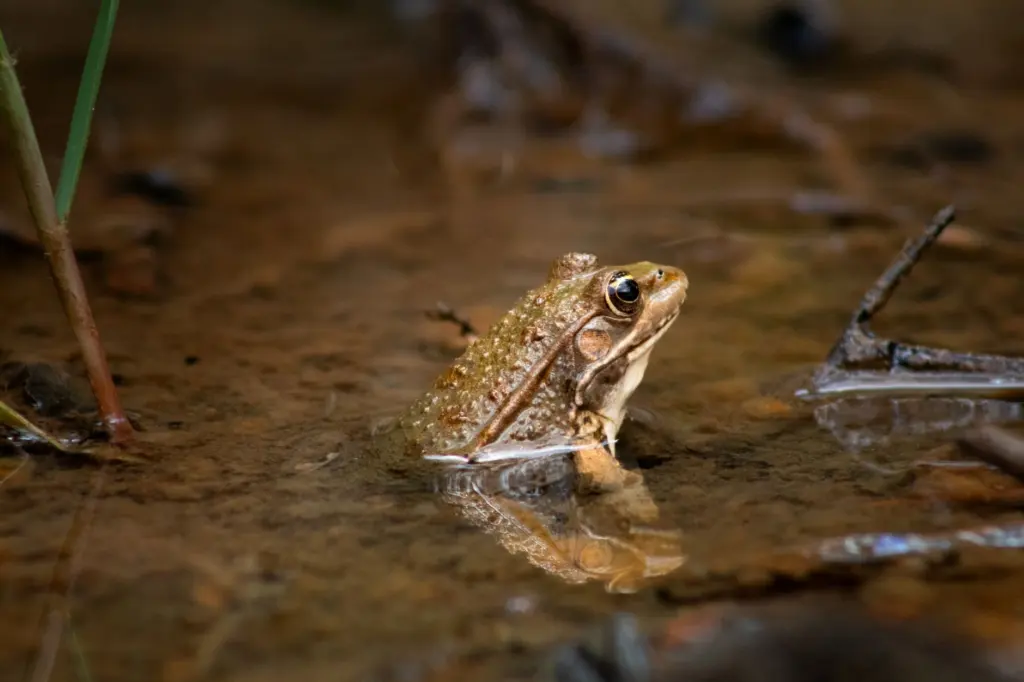
The egg mass survey is the practical method for the amphibians. Adults leave for the forest after breeding, so the egg masses left in the water are the more dependable evidence of a pool’s use. Fairy shrimp work differently: DEP counts their presence in any life stage, so no abundance figure is needed.

Maine’s significance criteria and legal protection
Not every vernal pool is regulated. Under the Maine Natural Resources Protection Act (NRPA), significant vernal pool habitat has been protected by law since September 1, 2007. DEP sets these abundance levels:
- Wood frogs: 40 or more egg masses.
- Spotted salamanders: 20 or more egg masses.
- Blue-spotted salamanders: 10 or more egg masses.
- Fairy shrimp: presence in any life stage.
- State-listed species: documented use in a given year by a state-listed rare, endangered or threatened species also makes a pool significant.
DEP states that any one of these levels, or a combination, documented in any given year determines significance. The count is the deciding evidence, so a pool that looks promising in March has no regulatory standing until a qualifying observation is documented.
The determination must be made and documented by someone with experience and training in wetland or wildlife ecology. A volunteer without that background can still gather careful counts, but the formal call rests with a qualified person.
Timing the egg mass count
DEP requires that egg masses be counted just past the peak breeding period of pool-breeding amphibians. Count too early and the masses are not all laid yet. Count too late and the evidence is gone or hard to read.
| Region | Wood frog count window | Spotted salamander count window | Planning use |
|---|---|---|---|
| Southern Maine | April 10 to April 25 | April 20 to May 10 | Earliest visits; frogs first, salamanders later |
| Central Maine | April 25 to May 10 | May 5 to May 25 | Late April for frogs, early to mid May for salamanders |
| Northern Maine | May 5 to May 20 | May 15 to June 5 | Latest windows; plan around snowmelt and ice-out |
These windows are the recommended count periods published by Maine DEP.
The windows differ because the two groups behave differently. For wood frogs, the right moment is approximately 2 weeks after full choruses begin, and DEP warns that their egg masses hatch very quickly and are more difficult to count much past peak breeding. Salamanders spread out their laying, often taking 4 to 6 weeks to complete it, so their window runs later and is more forgiving. If you can make only a single visit to a pool, the wood frog window is the less forgiving one to protect.
A field walk-through
A pool assessment follows a predictable order. Each stage depends on the one before it.
- Confirm the setting. Look for a shallow depression in flat ground that holds standing water in spring, with leaf litter and forest around it.
- Pick the dates. Use the regional windows above and listen for wood frog choruses, since the wood frog count follows them.
- Count each species separately. Record egg masses for wood frogs, spotted salamanders and blue-spotted salamanders on their own tallies, because each has its own threshold. Note any fairy shrimp in any life stage.
- Compare with the criteria. Check each tally against the DEP levels. One qualifying result, or a combination, in a given year is what counts.
- Get the result documented. Significance must be determined and documented by a trained observer. To request a DEP field determination, call your nearest DEP regional office and ask to speak to the on-call person in “Land & Water.”
Treat a count below a threshold as an observation for that year, not a final verdict, because DEP assesses abundance as documented in any given year.
Frequently asked questions
Can one visit cover both wood frogs and spotted salamanders?
Only where the windows overlap, and they overlap partly in every region. Maine Audubon asks volunteers who can manage it to survey twice in spring, once in April and once in May, which fits the earlier frog and later salamander timing.
What happens to the schedule in a cold spring?
DEP says breeding during cold springs can begin as much as 2 weeks later than in warm, wet springs. Shift the visit later rather than keeping to a calendar date.
Are there signs of a pool outside spring?
Yes. DEP lists flat topography with depressions, fingernail clams and caddisfly cases among indicators of a vernal pool in any season. They suggest where to look, but significance still depends on documented species counts or presence.