
Found a thorny shrub, a twining vine or a tall spike of purple flowers? Invasive plants in Maine are easiest to sort by growth form (shrub, vine or herb), then confirm with leaves, stems, fruit and habitat.
This guide is one part of our wider work on invasive species monitoring. It covers land plants only. For marine invaders, see invasive species in the gulf of maine.
Quick reference by growth form
Start with the growth form, then use the feature column to test your guess. Where the table points you to a fact sheet, the identifying detail lives there and not in a one-line summary.
| Plant | Growth form | What to look for | Planning use |
|---|---|---|---|
| Japanese barberry | Shrub | Grows up to 6 ft tall and wide and is covered with barbs. Small red fruit hangs below the stem. | Barbs plus hanging red fruit are a strong match. No Maine look-alike is reported. |
| Multiflora rose (Rosa multiflora) | Shrub | Thorny stems that form impenetrable thickets in forests and fields. | A dense thorny thicket is the cue to compare the plant with a fact sheet. |
| Glossy buckthorn | Shrub | Listed among Maine’s terrestrial invasive plants. Leaf and berry detail is on the state fact sheet. | Check the photo gallery before deciding. |
| Oriental bittersweet (also called Asiatic bittersweet) | Vine | Twines around other vegetation. Bark is furrowed, not peeling in shreds. | Check the bark to separate it from native grape vine. |
| Japanese knotweed (Fallopia japonica) | Tall herb | Up to 10 ft tall, with thick, jointed, hollow stems. Large semi-triangular leaves alternate on the stem. Spikes of small white flowers. | Hollow jointed stems and alternate leaves identify it. Flowers add confirmation. |
| Garlic mustard (Alliaria petiolata) | Herb | Listed on the UMaine Extension terrestrial plant page. Compare with the state photo gallery. | Confirm against a fact sheet before acting. |
| Purple loosestrife (Lythrum salicaria) | Wetland herb | Grows 4 to 6 feet tall, with pink-purple flowers on tall, crowded spikes. Flowers have 5 to 7 petals. | Easiest to recognise in flower at wetland edges. Count petals to rule out fireweed. |
Scientific names follow the University of Maine Cooperative Extension terrestrial plant list, and descriptive features come from the Bangor Daily News identification roundup.
What counts as invasive in Maine
In Maine a plant is invasive when it is not native to the state, has spread or can spread into minimally managed habitats, and causes economic or environmental harm, according to the Waldo County Soil and Water Conservation District. All three conditions matter. A non-native plant that stays put and does no harm does not qualify.

That distinction protects you from over-reacting. In the Midcoast area, Coastal Rivers Conservation Trust notes that approximately one third of the species are not native, yet only a small fraction of those are invasive. An unfamiliar plant is a reason to identify it, not to pull it.
The Maine Natural Areas Program (MNAP) keeps an advisory list of invasive and potentially invasive plants, with a fact sheet for each. The Maine Department of Agriculture, Conservation and Forestry maintains plant fact sheets and a gallery of photos and management tips. Treat those pages as the final check once the table has narrowed your options.
Shrubs: barberry, multiflora rose and glossy buckthorn
Shrubs are the group most likely to be mistaken for ordinary hedging or native understory. They also tend to form the thickest stands. Species like Japanese barberry and multiflora rose can form thorny, impenetrable thickets in forests and fields, so a barrier of spiny stems is a useful first clue.
Japanese barberry
Japanese barberry grows up to 6 ft tall and wide and is covered with barbs. Its small red fruit hangs below the stem. Maine has no look-alike, which makes barbs combined with that hanging fruit a more reliable pairing than either feature alone. Our japanese barberry identification guide goes into the species in more detail.
Multiflora rose
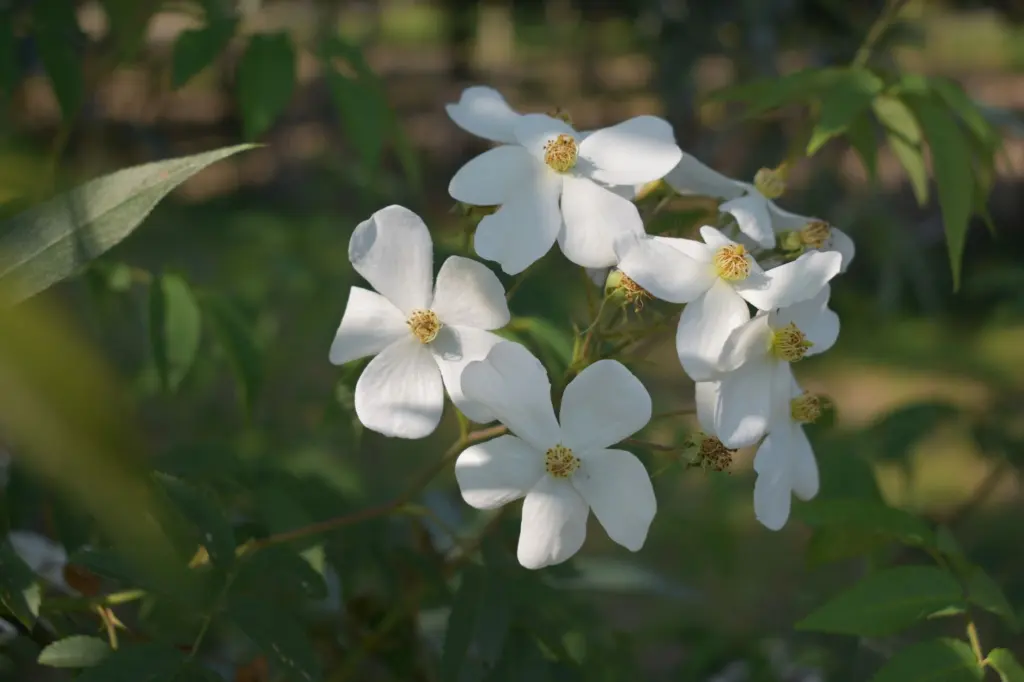
Multiflora rose (Rosa multiflora) is a thorny shrub, so thorns alone will not separate it from other roses. Look at the setting and the habit as well. Dense thickets in forests and fields are the pattern that should send you to the MNAP fact sheet.
Glossy buckthorn
Glossy buckthorn appears on the UMaine Extension list of Maine’s terrestrial invasive plants. Leaf and berry details are best taken from the state fact sheet and photo gallery rather than from memory. Compare more than one feature, and photograph the plant before you decide.
Vines: Oriental bittersweet
Oriental bittersweet, called Asiatic bittersweet in some sources, is an invasive vine that twines around other vegetation. The same Bangor Daily News roundup warns that it can cause large trees to collapse. That makes a vine climbing a mature tree a higher priority than one on a fence.
Bark is the feature that separates it from native look-alikes. Asiatic bittersweet has furrowed bark, while grape vine bark usually has a peeling, shredded appearance. Check the bark on an older stem before you conclude anything from leaf shape.
Herbs and tall perennials: knotweed, garlic mustard and loosestrife
Herbaceous invaders are easy to walk past because they die back and look like ordinary roadside or wetland vegetation. These three are among the plants that Maine guides single out for recognisable features.
Japanese knotweed
Japanese knotweed (Fallopia japonica) reaches up to 10 ft tall. It has thick, jointed, hollow stems and large semi-triangular leaves that alternate on the stem. In flower it produces spikes of small white flowers. It was introduced to the U.S. in the late 1800s as an ornamental plant. Its ornamental past is a reminder that garden plantings and wild stands can be the same species.
Garlic mustard
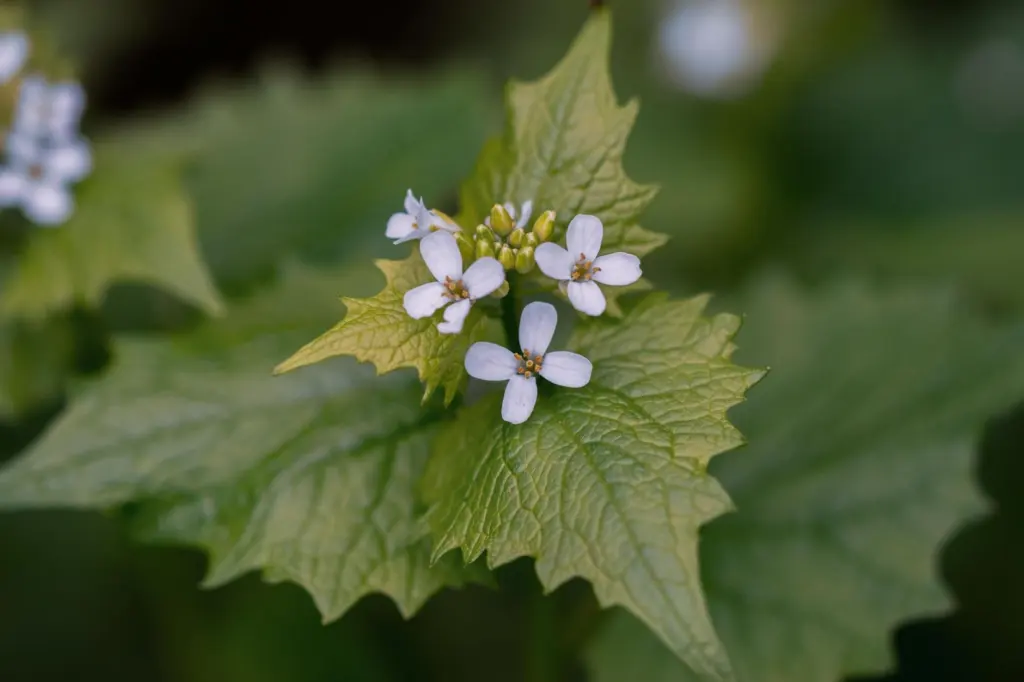
Garlic mustard (Alliaria petiolata) is on the UMaine Extension terrestrial list. Because it is a smaller herb, it is the species in this guide most worth checking against a photograph. Use the MNAP gallery for the leaf and flower comparison.
Purple loosestrife
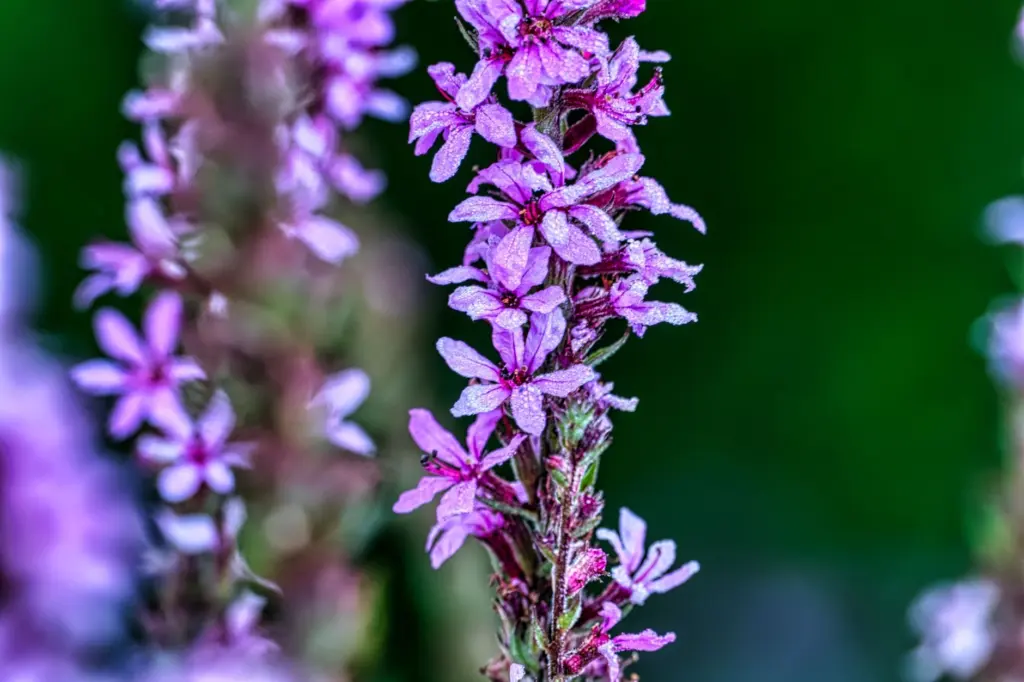
Purple loosestrife (Lythrum salicaria) grows 4 to 6 feet tall, with pink-purple flowers on tall, crowded spikes. It especially affects wetlands, stamping out plant diversity and degrading the habitat for wildlife. Look for it at wet edges, and expect it to be most conspicuous when in flower.
Native look-alikes to rule out
Several invaders have native or familiar plants that resemble them. These are the pairings with a clear, checkable difference.
- Purple loosestrife and fireweed. Purple loosestrife flowers have five to seven petals, while fireweed flowers are larger and have four petals.
- Oriental bittersweet and grape vine. Check the bark: grape vine tends to shred and peel, whereas Oriental bittersweet’s bark is furrowed.
- Japanese barberry. In Maine it has no look-alike, so the barbs and hanging red fruit together are decisive.
For the other species, rely on the MNAP fact sheets and photo gallery rather than guessing which native plant they resemble.
Maine sale and distribution restrictions
Maine’s Department of Agriculture, Conservation and Forestry adopted rules to prohibit the sale and distribution of thirty-three terrestrial plants deemed invasive. The rules took effect on January 14, 2017, and the prohibition on sales began on January 1, 2018.
When Maine’s sale restrictions were adopted, UMaine Extension reported that Japanese barberry, burning bush, privet and Norway maple were still in some demand in the nursery trade. For gardeners, the practical lesson is to check the current state list before buying a hedge or ornamental.
Reporting a plant you find
Residents can report invasive species to Maine’s four natural resource agencies. iMapInvasives is a free service managed by the State of Maine for tracking the spread of invasive species, and it is described by Waldo County Soil and Water.
A record is most useful when it includes the habitat, a clear photograph and your growth-form call. Even a tentative identification gives reviewers something to confirm.
Decision checklist
- Note the habitat. Wetland edge, forest or field narrows the options quickly.
- Sort by growth form. Decide whether you are looking at a shrub, vine or herb.
- Test one deciding feature. Use barbs, bark texture, petal count or stem structure.
- Compare with the state fact sheet. Use the photo gallery to confirm.
- Report it. Submit the photo and location through iMapInvasives or a state agency.
Frequently asked questions
What are the most common invasive plants in Maine?
UMaine Extension’s terrestrial plant page lists 20 species, including Japanese knotweed, multiflora rose, purple loosestrife, garlic mustard and glossy buckthorn. Japanese barberry and Oriental bittersweet are also widely highlighted.
Where can I find official fact sheets and photos?
The Maine Natural Areas Program provides fact sheets, a photo gallery and management tips. Its Maine Invasive Plant Field Guide is a printed option.
Could nurseries sell leftover stock after the rules took effect?
Maine nurseries and garden centers had until January 1, 2018, to sell stock already on hand.